February 23, 2026
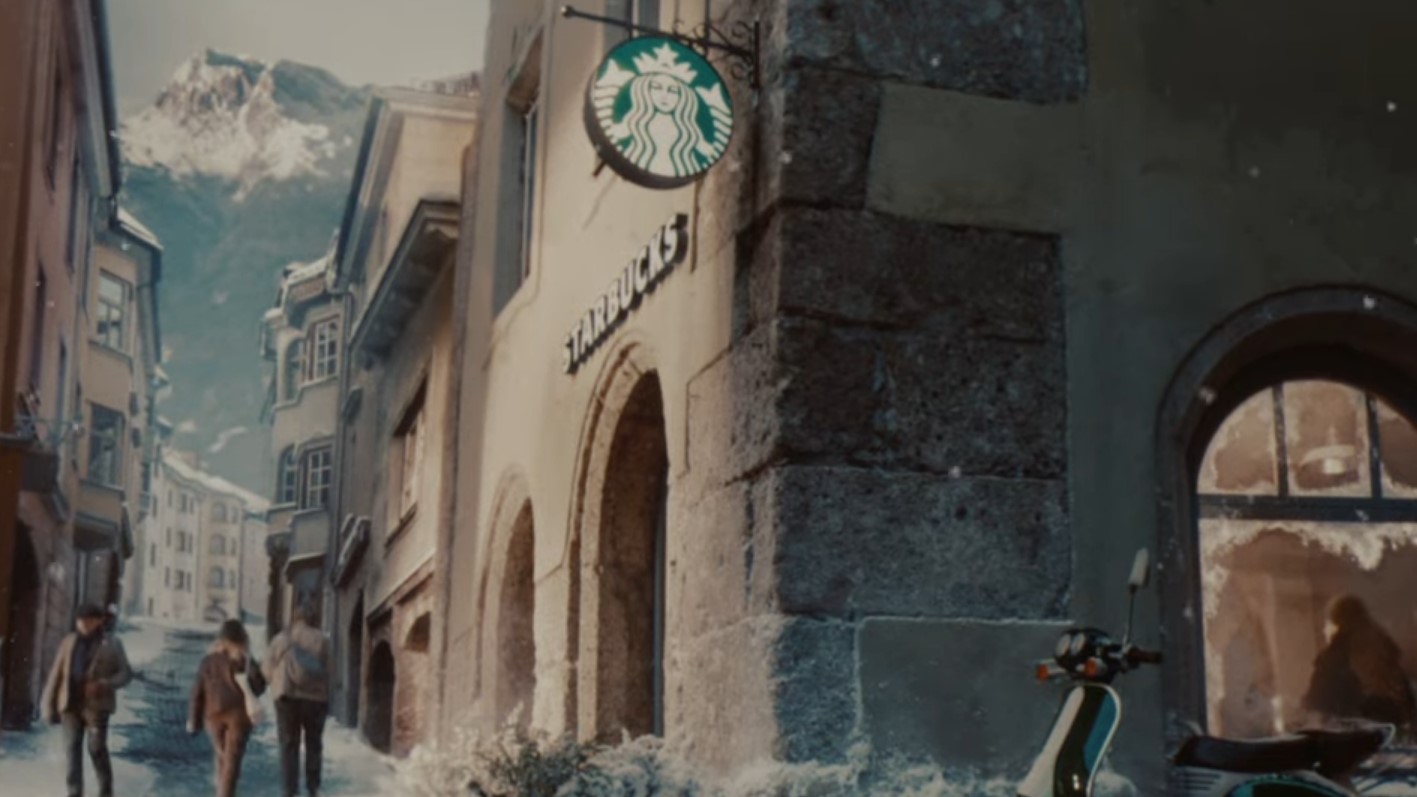
Winter in Michigan has a way of celebrating itself, especially when the Olympics are on and every other athlete seems to have trained within an hour of your house. But it wasn’t the medal count that stopped me in my tracks—it was a Starbucks ad. One musical choice, and suddenly I wasn’t on my couch anymore. I was back in a high‑school auditorium, leaning over a reel‑to‑reel tape deck, cueing up bits of sound. It’s funny how a few notes can pull you through time faster than any highlight reel.
Have you seen the Starbuck’s TV Ad, “The Coffee Run”?
I missed it during the Super Bowl, but the second I saw it during Olympic coverage, I almost yelled: “South American Getaway! From ‘Butch Cassidy and the Sundance Kid’ by Burt Bacharach.”
Which brings me to a story…
As a music and theatre kid in high school and college, I got into technical theatre: sound and lighting design, and later designing sets for the Muskogee Little Theatre. My entry into sound design was for high school productions. I would regularly raid my parents’ record collection, which had a lot of movie soundtracks. This gave me lots of emotionally-charged, non-vocal tracks I could repurpose as background. For example, when my high school did Neil Simon’s “The Good Doctor” (based on a collection of Anton Chekhov short stories), I used lots of sonic bits from the OST of “Doctor Zhivago” to evoke ‘Russianness’ where necessary, playing a waltz in the background of a party, or a Russian Orthodox dirge to convey a character’s death.
My high school vocal music director, Skip Klingman, had an album in his office of the Soviet Army Men’s Chorus, which I also borrowed, for a scene where two old former military men meet on a park bench. I think it was my exposure to the reel-to-reel tape unit in Skip’s office that first taught me enough to feel comfortable with such equipment. More about Skip Klingman below.
I’d record these bits of vinyl onto reel-to-reel tape, spliced with tape and paper leaders, with my finger on the Play/Pause button all through the shows.
One funny story: in college (to the detriment of my college credit-hour budget), I remained involved in theatre and advanced to scene design classes, ending up 1 credit hour short of a Minor in Theatre. I did sound for a production of “Dylan,” our revival of a 1964 Broadway play about the end of Dylan Thomas. I repurposed at least one of my Doctor Zhivago tracks, and created yet another MASTERPIECE of a reel-to-reel tape up in the tech booth, watching for the next Play/Pause, with again, all the tape splices ready and waiting for the next cue.
Just as I was about to press PLAY, my tape splice suddenly fell apart. Two pieces of audio tape, on spools on both sides of the head fell, dangling. The director in my headset is saying “cue music” in increasing volume and urgency. It felt like an eternity, but probably only seconds as I considered how to put it back together quickly. I couldn’t. So, I fed the tape into the play head, pressed Play, and the clip played while the tape starts spooling out, serpentining onto the floor.
After that, I had time to pull the tape back together and repair the splice before the next clip.
It was by no means a victory, but a great story of how physical media lets you down sometimes. Maybe my deep experience with tech theatre is why, when people ask me what part of modern corporate Information Technology I hate, I always say: “AV.”
Coinciding with the Winter Olympics, Skip Klingman passed away. Below is what I wrote about him on his obituary guest book:
I was so sorry to hear about Skip’s passing. Our thoughts are with Jo, his family everywhere, and with all the former choir kids who mourn.
As Dennis Weibel posted, I also started singing for Skip at First Presbyterian in Muskogee, which instilled in me a lifetime love of singing. This led to Muskogee High Choirs, the vocal ensemble “Young People,” and the high school musicals. I volunteered with him for several years, doing lighting for Betty Barger’s Dance Recitals.
I always appreciated how he sincerely valued every student he worked with and treated them like adults, which, looking back, was an incredible oversight. I can’t recall if I was his office assistant at MHS one year, or if I just hung out there too much. Either way, not only was I introduced to Vivaldi, but Led Zeppelin’s “In Through the Out Door.” His Marantz receiver was a thing of beauty.
May you live in light perpetual, Skip. Looking forward to singing with you “later,” but not too soon…
That only begins to describe the man, and thinking about our years going from choirmaster, to teacher, to friend and colleague constantly dredges up new memories.
His brown panel van (used to haul the school’s Fender Rhodes piano and AV equipment a lot) had the words NO SMOKING on the dashboard in various languages. My Dad and I contributed the Hungarian equivalent.
Since I was a high school journalist and opinion editor, we’d discuss current affairs and who knows what else. He’d let me use one of his small practice rooms for interviews for the school paper. I can’t recall why, but once he said to me, “You’re just an elitist. But I see nothing wrong with that.” I don’t know if he intended that as a compliment or not, but I took it as one.
When he decided to do “Camelot” as the high school musical, I jumped at it, brainstorming ideas months before it was announced. He really wanted me to try out for Arthur, but instead, I opted for Student Director, designing program cover art, and helping the actors convey and project their lines in the space.
As a techie, Skip always had his 35mm camera with him, and he became the unofficial documentarian of every Muskogee High School senior class. His slideshow of images, with a musical track underpinning, was the highlight of every year’s Senior banquet.
After what was a lifetime to a young person (12 years) in Muskogee, Skip and his dear wife Jo moved to Weatherford, where he joined the vocal music faculty at SWOSU. Nearer to family in western Oklahoma and a great opportunity to work at his alma mater. He’d still come back every year to sing the Tenor parts in Muskogee’s Christmas production of Handel’s Messiah.
Like you do when people move away, we drifted apart in our friendship. From my lens, it seemed that despite working for a branch of the state university, his political leanings started moving to the right. Maybe that was always there, I can’t remember. As he was a true Boomer, I learned later he had some guilt about not going to Vietnam when so many didn’t come back.
It’s funny how little things lead to these recollections.
Looking back, I realize these fragile little things—the tape splices, the borrowed records, the makeshift tech setups—were never the point. What mattered were the echoes they carried: the mentors who believed in us, the craft we learned by doing, the friendships and failures that became stories worth retelling. Skip’s voice, his humor, his presence in those formative years—they’re still here, humming underneath the noise of daily life, reminding me of the importance of art and giving back to the next generation. Some sounds fade. Others settle in and stay.
