May 5, 2026
Last week I had an observation related to music and organizational leadership.
I love it when my diverse interests come together!
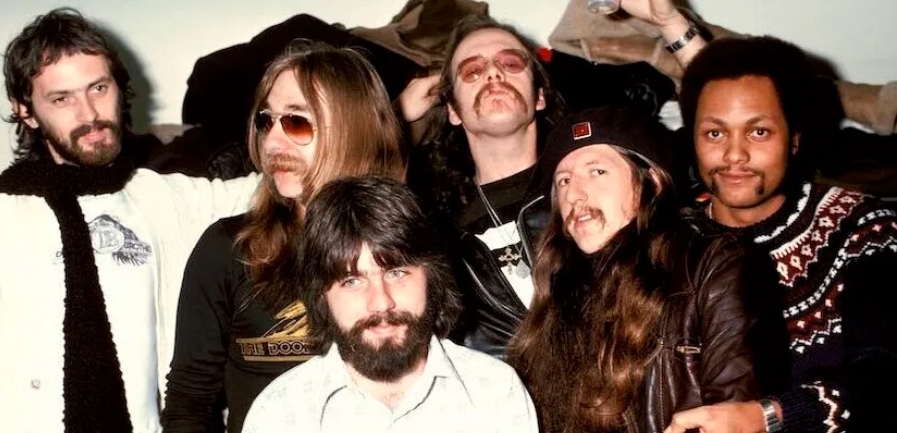
As I’m fond of pointing out how creative solutions come from diverse thinking, I was recently listening to Billy Corgan’s podcast “The Magnificent Others,” where his guest was guitarist Jeff “Skunk” Baxter, a long-time member of the Doobie Brothers, and Steely Dan.
I’ve been a big Steely Dan fan forever. I think my first exposure to their musical mind virus came courtesy of OETA, Oklahoma’s PBS network, as a teen. When the timing of British shows didn’t quite work out to the top of the hour, they’d usually play a station identification slide with a loop of the break of “Black Cow” from “Aja.” From 02:44 — 03:25. Don’t say I didn’t warn you.
I didn’t know it then, but the incubation period of that virus had begun. It didn’t reach peak virulence until I passed it on to Karen after we were married.
Fast forward to the 90s and beyond: when Steely Dan resumed touring we saw them twice at The Gorge in Washington State, and once in Arlington, TX in the early 2000s.
But I digress.
When Steely Dan moved from touring to being a studio band, many of their existing players, like Skunk Baxter, Denny Dias, and Michael McDonald, went elsewhere. Doobie co-founder Tom Johnston’s recurring bleeding ulcer in 1975 made it necessary to bring in Michael McDonald as an emergency lead singer for that year’s tour, and it changed their musical focus. On the podcast, Baxter talks about how Steely Dan’s musical approach “infected” the Doobie Brothers. He says that 1977’s “Living on the Fault Line” is essentially a Steely Dan song.
Michael McDonald joining the Doobies was the catalyst that moved them from a biker-rock band to a new level of precision.
Baxter said that the Doobie’s rhythm section was hired out to other groups in studio, imposing a new rigor and technical excellence, like a 1970s version of the famous Wrecking Crew. They’d clock in, read the charts, and make music — put in the hours. Take a break for lunch, then continue.
Via the Steely Dan infection, this reorganization of the Doobies became better musicians and creatives. The band was receptive to change and new possibilities and chose to level up their skills and experience greater success.
Much like when organizations bring in change agents.
Everyone talks a good game about wanting to be an organization that embraces a change culture, but few are comfortable enough to experiment — only when facing the necessity of change do people leading companies willingly make that leap. For many, their days as a young startup are WAY behind them, so the calcified approach is the safest: they keep playing their greatest hits rather than push the envelope and make new art. You risk alienating today’s fans, but it’s up to you to bring them along on your journey.
The famous BCG (Boston Consulting Group) Matrix is all about that. Many companies are like the pre-1975 Doobies — successful and comfortable — but they risk being on the path to becoming a Dog (low growth, low share) if they don’t allow a new sound (innovation/change agent). If they don’t change and are lucky, they remain a Cash Cow (low growth, high share) rather than analyzing the market forces and taking a chance on change.
I’ve been a part of high-performing teams. I’ve seen some of those teams morph and change as leadership changes. And I’ve seen others unable or unwilling to take the necessary steps. I will say: once you’ve experienced the charged energy of being a part of a great team, nothing else comes close.
One way to set the stage for becoming a great team is to have a good framework in place. Analyses have shown that any organization of sufficient size and complexity has the following elements:
- a CEO, who administers the org, oversees strategic planning, and in some cases, manages risk.
- a leadership team comprising various functional areas that support the mission. The LT supports the CEO, rolling up their own plans, often in the form of 5-year goals that are reported and updated to the Board annually.
- a Board, to whom the CEO reports, approves the goals, manages risk, and represents shareholder interests. Often, they utilize professional-centered committees to ensure governance (audit, compensation, nominating, etc.).
- the Board committees report to the Board chair.
- the CEO and Board both maintain a firewall between their roles and responsibilities and the internal organization.
Most boards cluster around 10-12 individuals. One community-based organization I was a part of had a board of 70 (!), but the board executive committee of 10 did most of the heavy lifting, and the big board membership, in addition to regular voting responsibilities, was broken into committees that offered advice and consent to functional LT areas (IT, Finance, etc.). While this was definitely a complex system, most of the work took place in smaller groups, reaffirming that for most of us, Smaller is Better.
Because so many of my boards were mission-centered, most of my experiences were positive. However, over the years, I’ve seen lots of bad examples in boards, like…
- the Self-Dealer: the board member who wanted his son’s Managed Service Provider company to run the internal IT function — a violation of the fiduciary duty of loyalty. This one was stopped by the chief legal counsel. Also: the Board member who chose to participate materially as a Project Manager of a new building — this is a breach of “Duty of Care.” Seasoned board members have an expression to keep this from happening, called NIFO: Noses In, Fingers Out. This Board member put his fingers WAY IN. This one was not stopped.
- the Rubber Stamper: a personal friend of the CEO or Board Chair, who never asks the tough questions. Without a Devil’s Advocate mindset, sometimes this results in “mission creep” or financial peril. No one is willing to say No.
- the Professional Contrarian: the opposite of the Rubber Stamper, who treats anyone bringing any action items as a hostile witness. Over time, board members exit rather than endure the marathon of frustration. I’ve seen the Professional Contrarian tag-team with the Self-Dealer
- the Micromanaging Founder. Sometimes, the Founder retires from the CEO role and gets appointed as Board Chair, to keep the institutional knowledge close by. In theory, it’s reasonable, but sometimes the Founder cannot let go of the “how” and treats the new CEO as their personal assistant. I’ve even seen where the former CEO would come by on New Year’s Eve, to make sure the new CEO hadn’t given everyone the afternoon off.
- No term limits (the endless country club). Bylaws need to be clear on this from the outset, balancing institutional memory against fresh perspectives. Most boards I’ve experienced have ongoing nominating committees, defined term limits, and rotate so that one-third to one-quarter of the board expire annually. One horribly bad example: a board that had members in excess of 30 years! Even when new people joined, they didn’t stay long in the face of such resistance to change.
Often, the leadership team are ex-officio members of the board. But depending on by-laws they may or may not have voting rights. Which I believe is how it should be; the LT members should not vote and are there to provide context and role-based expertise to any deliberations.
I was actually appointed to a nonprofit’s board long before being an ex-officio elsewhere, and someone said that the LT “shouldn’t get too chummy.” Their roles are different for a reason.
Related to that, another set of problems I’ve observed relate to the Passive or Captive Board…
- the Imperial CEO. Without a strong board chair to set the agenda and demand accountability, board meetings become a nuisance or formality, with information curated by the CEO/LT so the board is only shown what looks favorable. Without good chair oversight, the “Early Warning Light” of financial or operational problems is permanently turned off
- the Information Vacuum. The board chair functions as the information gatekeeper between the Directors and the LT. Leadership might overwhelm the board with a “data dump” to seek to hide a lack of strategy or minimize meaningful discussion. On the other side, with a lack of information, the board might rubber-stamp decisions because they don’t feel empowered to ask for more.
- Cultural Erosion. Leadership is contagious, and if the board chair doesn’t exercise control or discipline in meetings, other board members will follow that lead. High-performing board members, who want to contribute, might leave in frustration or not prepare for meetings. Conversely, if the LT loses respect for the board and the process (knowing the board won’t challenge them) they may stop being rigorous in their own planning and decision making. I’ve seen this often with board chairs who either (a) want to be liked, or (b) have retired and are using the board as a social gathering space.
Coming back to Steely Dan for a moment, as producers, Walter Becker and Donald Fagen were the ultimate Board Chairs who demanded 40 takes of a guitar solo. A high-performing board acts like a producer: they don’t play the instruments (CEO and LT), but they ensure the final output meets a standard that pushes the envelope.
The transformation of the Doobie Brothers wasn’t just about changing singers; it was about an entire organization deciding that good enough was no longer the standard. They allowed the Steely Dan virus to rewire their musical DNA.
Whether you are part of a for-profit, a nonprofit, or a scaling tech firm, the lesson is the same: High performance is a choice made at the top. It requires a Board Chair who isn’t afraid to lead, a CEO who welcomes the constructive friction of a Devil’s Advocate, and a Leadership Team that values rigor over chumminess.
When those elements align—when the Noses are in and the Fingers are out—the organization stops just playing the greatest hits of the past. It starts making the kind of new art that keeps it relevant for the next generation.
It’s a hard shift to make. It’s uncomfortable. But once you’ve heard the harmony of a truly high-performing team, you’ll never want to play a solo act again.
Leave a Reply