May 19, 2026
Busy weekend!
We said goodbye to a visiting friend from Oklahoma on Friday, and by Sunday we were at the Detroit Masonic Temple for “Candlelight: 90s Hip-Hop on Strings,” which was wonderfully fun and intimate in the smaller auditorium. The musicians were the Kalkaska String Quartet, based here in Michigan. Joe Jackson was getting ready to play upstairs, and a few blocks away the Pistons were unfortunately losing Game 7 to the Cavaliers. Detroit really is a city waking back up.
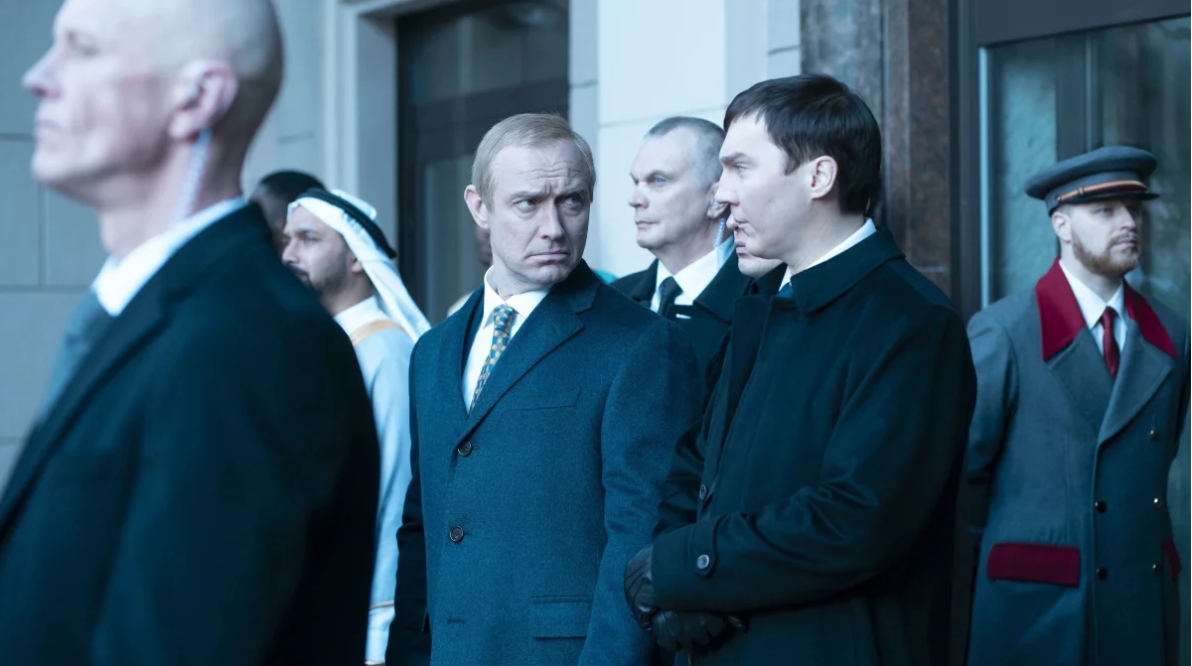
In between, we saw the film “The Wizard of the Kremlin” starring Paul Dano and Jude Law. A good and measured review by NPR can be found here.
I’ve had an odd fascination with Russia since childhood — probably because the USSR’s choices indirectly led to my being born in Oklahoma. So when the film reached back into the early ’90s, names like Yeltsin and Berezovsky came rushing back.
If you haven’t followed Russia closely, prepare for a firehose: part thriller, part lecture. It touches on
- the rise of Russian troll‑farm disinformation
- oligarchs shaping governments
- Putin’s drive to reassemble a Soviet‑style sphere of influence
One stray thought I had through this movie was: why are movies about Russia (e.g. Dr. Zhivago) so long?
The 90s were full of both hope and Western missteps. I’ve often wondered if, after the collapse of the Soviet Union, things would have been different if the United Nations had demoted Russia from the Security Council. After all, Russia lost its satellites; Ukraine inherited 1,900 nuclear weapons; and Yeltsin recognized Ukraine’s sovereignty — a fact Putin has since rewritten through invasions in 2014 and 2022. As Jude Law’s Putin says in the movie: “They treated me like I was the President of Finland.”
Global threads tug on each other. We’re seeing that more clearly now. As our President oscillates between bluster and reassurance, markets keep humming along as if the fundamentals of post‑1947 stability — U.S. security guarantees and the dollar’s reserve‑currency role — are unshakeable. They’re not.
What’s more, the Finance Bros running everything appear to have slept through the part of macroeconomics that explains how fragile global supply really is — oil, fertilizer, helium, aluminum, sulfur — a lot of which is trapped on the other side of the Strait of Hormuz.
The fact that Russia is stepping on another nation makes it more likely that others will try it too (US v. Venezuela, US v. Iran, and waiting in the wings: China v. Taiwan).
These kinds of movies hold up a mirror to our world. Watching the cold, calculated rebirth of modern Russian authoritarianism play out on screen makes it clear that the blanket is fraying. From scaling back our presence in Germany to waffling on exercises in Poland, we are actively rewriting our global protector role on the global stage in ways that tug at that blanket.
Like a long, winding epic in the vein of Dr. Zhivago, the narrative of global politics takes patience to sit through. We enjoyed the beautiful, intimate sounds of the 90s on strings this weekend, but stepping out of the theater, it’s easy to be jolted back to reality. Actions on the other side of the globe have a funny way of landing right on our doorstep.
Leave a Reply